Home & Living
Place Houseplants Around the Room You Actually Use
Plan plant positions around care labels, household access and the furniture already in the room.
This story may contain affiliate links. We may earn a commission on qualifying purchases. Read our disclosure.
IN THIS STORY
Separate the plant choice from the display choice
A plant can look perfect beside a sofa and still be wrong for that position. Start with the requirements of the actual plant, using the grower's care information, and compare them with the conditions in the room. A photograph can suggest a color or composition; it cannot tell you whether the same species will suit your window or household.
Make a short list of the plants you already own, their containers and where they currently live. Notice which positions make watering awkward or leave leaves brushing a curtain. Before buying another stand, see whether the collection needs to be rearranged. One well-placed plant can be easier to enjoy than several squeezed into the only convenient corner.
Look at the room at different times
Check the proposed location during an ordinary day. Curtains, neighboring buildings and the season can change the light reaching a plant. Use species-specific care guidance instead of assigning every green plant to an empty shaded corner. If you cannot identify the plant, ask a knowledgeable supplier before making assumptions about its needs.
Consider the household as carefully as the light. Keep plants and containers out of busy walking routes, and check reliable species information before bringing a plant into a home with children or animals. A high shelf is not automatically inaccessible. If suitability is uncertain, choose a different plant or another decorative object rather than relying on position alone.
Protect the surface and keep access simple
Choose an appropriate container and arrangement for the plant's watering requirements. Check what sits beneath the pot and how moisture will be contained without trapping a hidden leak against furniture. Follow care guidance for both the plant and the supporting surface. A decorative outer pot is not a reason to stop checking what happens after watering.
Lift the plant only if the weight and shape are manageable. A position that requires moving a lamp, several books and a chair before every care task will become frustrating. For a large plant, plan how you will reach and maintain it before carrying it into a tight corner. Keep the floor area around it available for ordinary cleaning.
Judge a stand by stability
Measure the base of the pot and the available footprint. Follow the stand's load and assembly instructions, and make sure the intended container sits securely. A narrow stand can save floor space but needs to suit the actual weight and position. Do not turn a decorative side table into a plant stand without checking whether it is appropriate for that job.
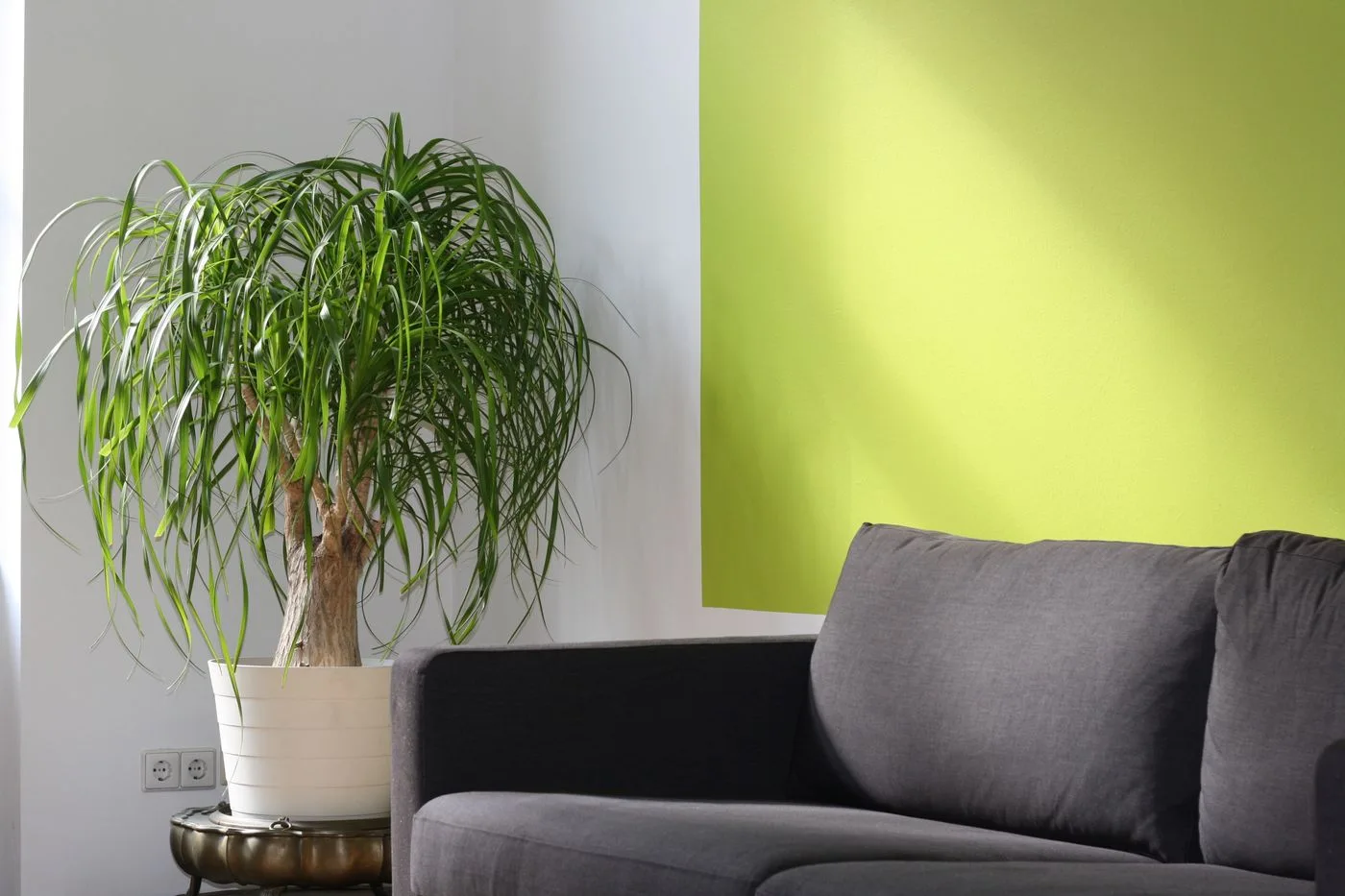
Leave space for leaves rather than counting only the pot diameter. Keep plants clear of equipment and fittings as their instructions require. If the room is already crowded, use a stable existing surface instead of adding another small piece of furniture. The display should make the room more pleasant to use, not introduce a new obstacle beside the sofa.
Build care into the placement
Keep the relevant care information together and choose a convenient place for the tools you actually use. Check the plant according to its needs rather than assuming every species follows the same calendar. Make a note when a location proves inconvenient so that the next rearrangement addresses a real issue.
Photograph the display from the room's normal entrance. If the plant competes with a lamp or hides the object you reach for every evening, adjust the arrangement. Our living-room layout guide helps place the larger furniture first. For a plant beside a chair, check the reach and light considerations in the reading-corner guide.
Plant-display questions
Should all the pots match? Repeating one material or color can create a connection, but suitable dimensions and plant care come first. Existing containers can work together without being a set.
Can a plant go on a bookshelf? Only when the shelf, light, access and plant requirements support the choice. Do not treat any empty shelf as a suitable growing location.
What should I buy first? Identify the actual difficulty. A protective saucer, a suitable container or clearer care information may solve more than a new plant stand. If the plant itself is unsuitable for the home, a display accessory will not change that.
Girl In Home creates practical guides to style, home and travel. Our new buying guides explain selection criteria and tradeoffs; they do not claim hands-on testing. Our approach.


