Style
How to Choose an Everyday Sweater You Will Actually Wear
Compare sweater fit, texture, layering room, and care needs before paying for another knit that stays in the drawer.
This story may contain affiliate links. We may earn a commission on qualifying purchases. Read our disclosure.
IN THIS STORY
Give the sweater one clear job
The sweater you wear while answering emails at home has a different job from the one tucked under a tailored coat. Start by choosing the main setting. For indoor warmth, softness against the skin and easy movement may matter most. For commuting, think about sleeve room under outerwear and whether the neckline works with a scarf. For a polished workplace, surface texture and how the hem sits with trousers can matter more than decorative detail.
There is no single ideal fiber for everyone. Climate, personal sensitivity, laundry access, and budget all affect the choice. Avoid treating a luxury fiber name as a guarantee of comfort. A sweater can be beautifully described and still feel scratchy at the neck or bulky beneath your existing jacket.
Compare fabric and construction together
Read the full composition rather than the large word on a swing tag. A blend may behave differently from a garment made entirely from one fiber, but composition alone cannot tell you how the finished knit will feel. Look closely at the knit density, seams, ribbing, and overall weight. Hold the garment up and check whether its shape already seems uneven.
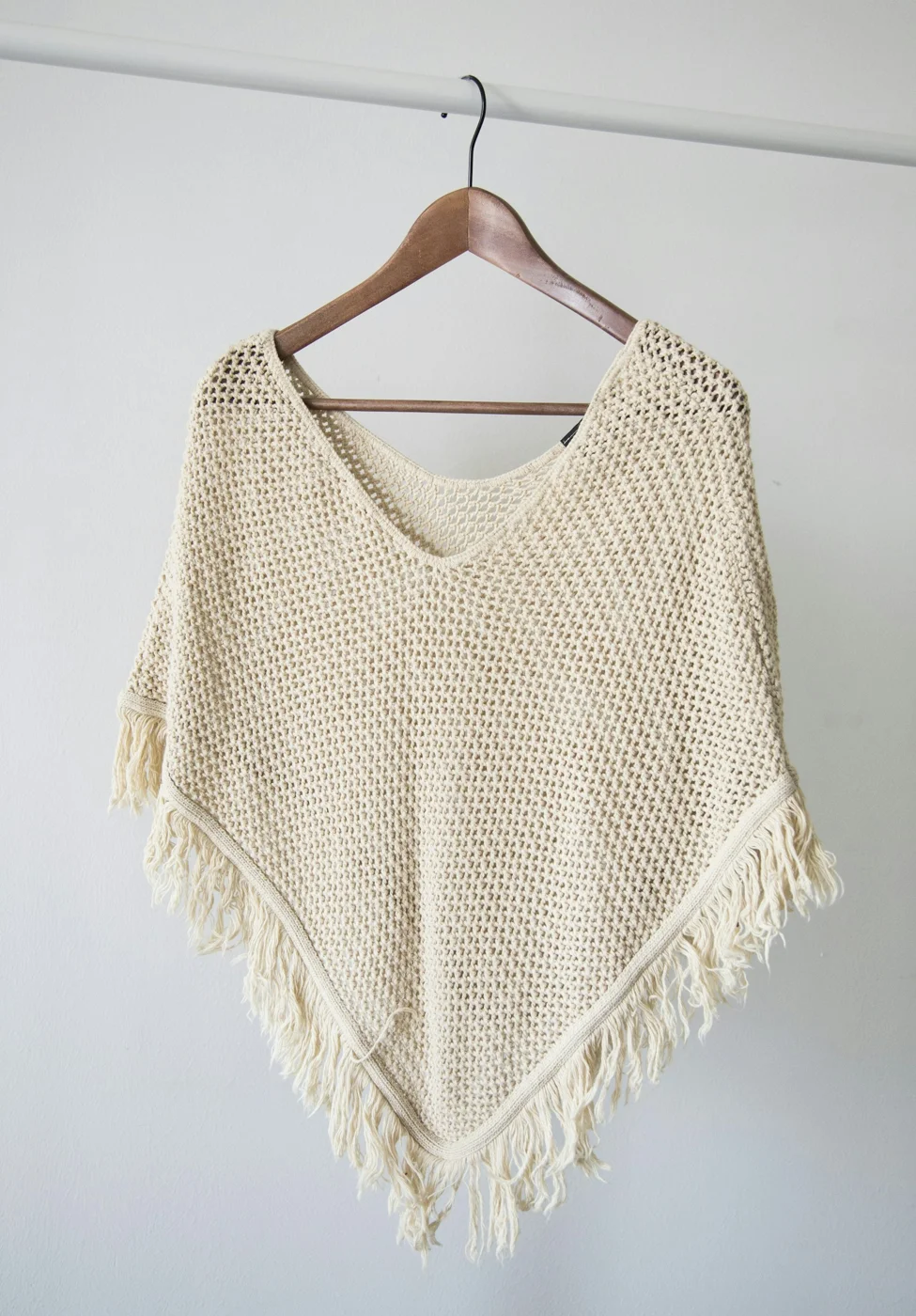
A loose, airy knit can look lovely over a camisole but may catch easily on jewelry or bag hardware. A denser knit may be more practical for repeated layering, while also feeling warmer indoors. Match the structure to your day. Do not assume that weight automatically proves quality; it can simply reflect a different design.
Run a fitting-room movement check
Wear the kind of base layer you expect to use. Raise your arms, sit down, and reach forward. Check that the neckline remains comfortable and the shoulder seam falls where you like it. If the sweater is designed with dropped shoulders, judge the whole silhouette instead of applying tailoring rules that do not fit the design.
Try the hem with your most common trouser rise. A long ribbed hem can bunch at the hips; a short boxy cut can lift farther than expected when you move. Neither is inherently wrong, but both affect usefulness. Take a picture from the side as well as the front if photographs help you see proportions clearly.
Buy for your actual care routine
Read the garment label before purchasing. Some knits can be machine washed under specific conditions; others need a more careful process. Follow the label for that particular garment rather than a general internet rule. Woolmark's care guidance is a useful reference for wool, but it does not override the instructions on your sweater.
Think about drying space and storage as part of the cost. If you have a tiny apartment and no suitable flat drying area, a labor-intensive sweater may be awkward. Keep knits clean and dry before storing them, and avoid compressing a crowded drawer so tightly that you cannot find what you own.
Choose color through existing outfits
Before deciding between two colors, picture the knit with your usual trousers, coat, and shoes. A warm oatmeal shade might be more versatile in a brown wardrobe than a stark white. A deep green or burgundy may work almost like a neutral if it already appears in your accessories. The right color is the one you can use repeatedly without building an entirely new outfit.
Texture supplies interest when the shape is simple. A visible rib, subtle cable, or contrast trim can make a basic combination feel complete. If you want a statement sweater, keep its supporting outfit straightforward. There is little value in a dramatic neckline that cannot be worn with any bra or jacket you own.
Decide where extra spending helps
Paying more may be reasonable for a fit you cannot easily find elsewhere, thoughtful construction, or a fabric you enjoy enough to wear frequently. It is less useful when the difference is a small label or a marketing story you cannot evaluate. Inspect the actual garment, and compare the return policy before ordering several sizes.
If budget is limited, begin with one sweater suited to the most common weather in your week. Wear it before purchasing a second color. Keep a note of what works and what does not. That experience is more useful than buying a whole drawer of similar pieces at once. Our weekday wardrobe guide can help place the purchase in context.
Practical sweater questions
Does pilling mean a sweater is worthless? Surface pills can occur during wear; examine the garment's overall condition rather than drawing a conclusion from one feature. Handle any removal according to the care guidance and fabric involved.
Should you size up for layering? Try your actual base layer first. Sizing up can create excess sleeve length and a neckline you do not want.
Is a cardigan more useful than a pullover? A cardigan allows easy temperature adjustments and can be worn open, while a pullover offers a simpler outline. Choose based on the way your rooms and days change, not a universal ranking.
Sources & further reading
Source review: October 10, 2026. Confirm current terms and availability before buying or booking.
Girl In Home creates practical guides to style, home and travel. Our new buying guides explain selection criteria and tradeoffs; they do not claim hands-on testing. Our approach.