Home & Living
Compare Table Outline Beside a Retained Green Sofa
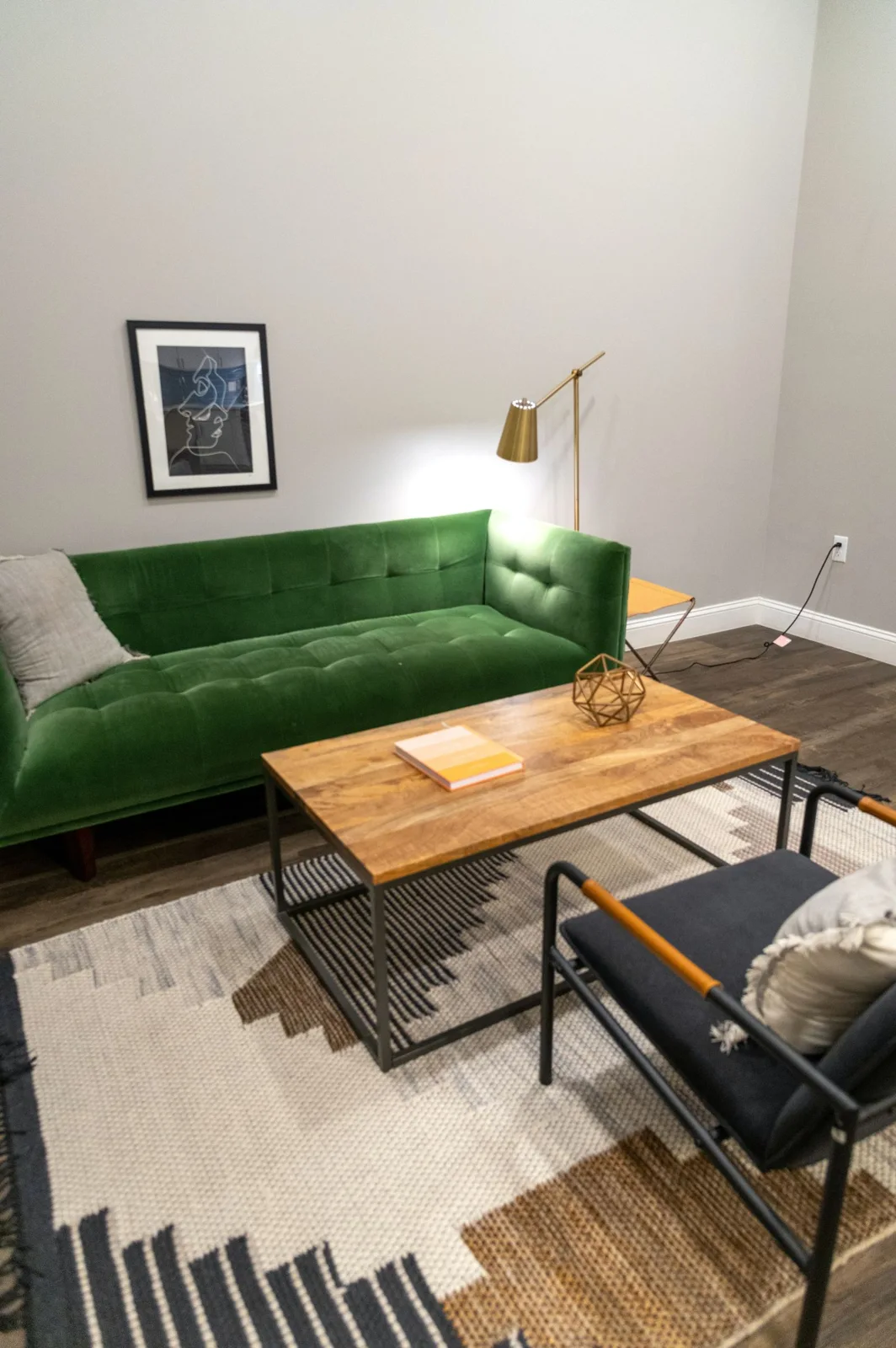
Compare a table outline beside a retained green sofa, weighing visual mass, repeated curves and the room view before choosing a finish or adding more small furniture.
This story may contain affiliate links. We may earn a commission on qualifying purchases. Read our disclosure.
IN THIS STORY
Hold the sofa constant
A green sofa already supplies a large color reference. When considering a nearby table, start with outline instead of searching immediately for another green detail. Look at the sofa's arms, legs and overall mass. A deep upholstered arm produces a different relationship from a narrow exposed frame.
Keep the sofa in its ordinary position while you compare. Moving it away from the wall or clearing half the room for a photograph can conceal the very constraints the table must work within. Include the rug, circulation route and neighboring furniture in the view.
Distinguish open and solid forms
An open-legged table lets the floor remain visible beneath it. A solid pedestal or boxed base creates a larger uninterrupted shape, even if the tabletop dimensions are similar. Compare how that mass relates to the sofa rather than assuming a smaller measurement always means a lighter appearance.
A photograph from the usual doorway helps reveal overlapping outlines. The table's legs may disappear against the sofa's dark base or repeat its shape in a way that feels deliberate. Look at the complete corner before focusing on the polished surface in a close-up product image.
Compare curves and corners
A rounded tabletop can soften the appearance of a strongly rectangular sofa, while a squared table may reinforce its clean lines. Either can work. Identify whether the room already contains several repeated curves or mostly straight edges, then decide which relationship you prefer.
Keep physical access separate from visual preference. Check the actual table dimensions, intended use and suitable placement. A curved outline does not guarantee an unobstructed route, and a decorative side table may not be intended to support everything you currently place beside the sofa.
Consider finish after the shape
Once the outline works, compare its finish with retained surfaces such as timber flooring, a metal lamp or nearby shelving. The table need not match the sofa's color. It can connect through warmth, sheen or a repeated material elsewhere in the room.
If the choice feels unsettled, remove one temporary object from the table and look again. A crowded surface can disguise a good relationship between the furniture pieces. Conversely, a carefully styled vase should not be required to make an unsuitable table look balanced in every view.
Save the preferred outline and dimensions before browsing more finishes. This reduces the temptation to restart the whole decision for a slightly different shade. If your current table already provides the right shape and function, keep it in the comparison. The useful outcome may be a clearer arrangement of existing pieces rather than another purchase.
Related reading
Plan the Sofa Reach Zone Before Buying a Coffee Table, A Calm Living Room on a Realistic Budget.
Girl In Home creates practical guides to style, home and travel. Our new buying guides explain selection criteria and tradeoffs; they do not claim hands-on testing. Our approach.


