Home & Living
Leave the Table Center Useful for the Actual Shared Meal
Leave the table center useful for the actual shared meal, keeping optional decoration and genuine serving pieces in clear roles from preparation through return.
This story may contain affiliate links. We may earn a commission on qualifying purchases. Read our disclosure.
IN THIS STORY
Begin with the serving plan
A table center is easier to arrange when the actual meal is clear. Name the suitable serving pieces genuinely needed and the real sequence in which they are used. A decorative centerpiece should follow that plan rather than decide how the household manages the food.
Keep the people and relevant guest needs central. A quiet center can be a deliberate choice, and a shared meal does not require a full display to feel considered.
Separate working objects from decoration
Identify which retained pieces serve an actual task and which remain a personal visual preference. A decorative vessel should not be assumed suitable for food or another use from appearance alone. Preserve the real product identity where intended use or care needs clarification.
If several optional objects have accumulated, remove one and compare the same setting again. The useful change may be a clearer group rather than another purchase. A gap is not automatically missing decoration.
Include the complete place settings
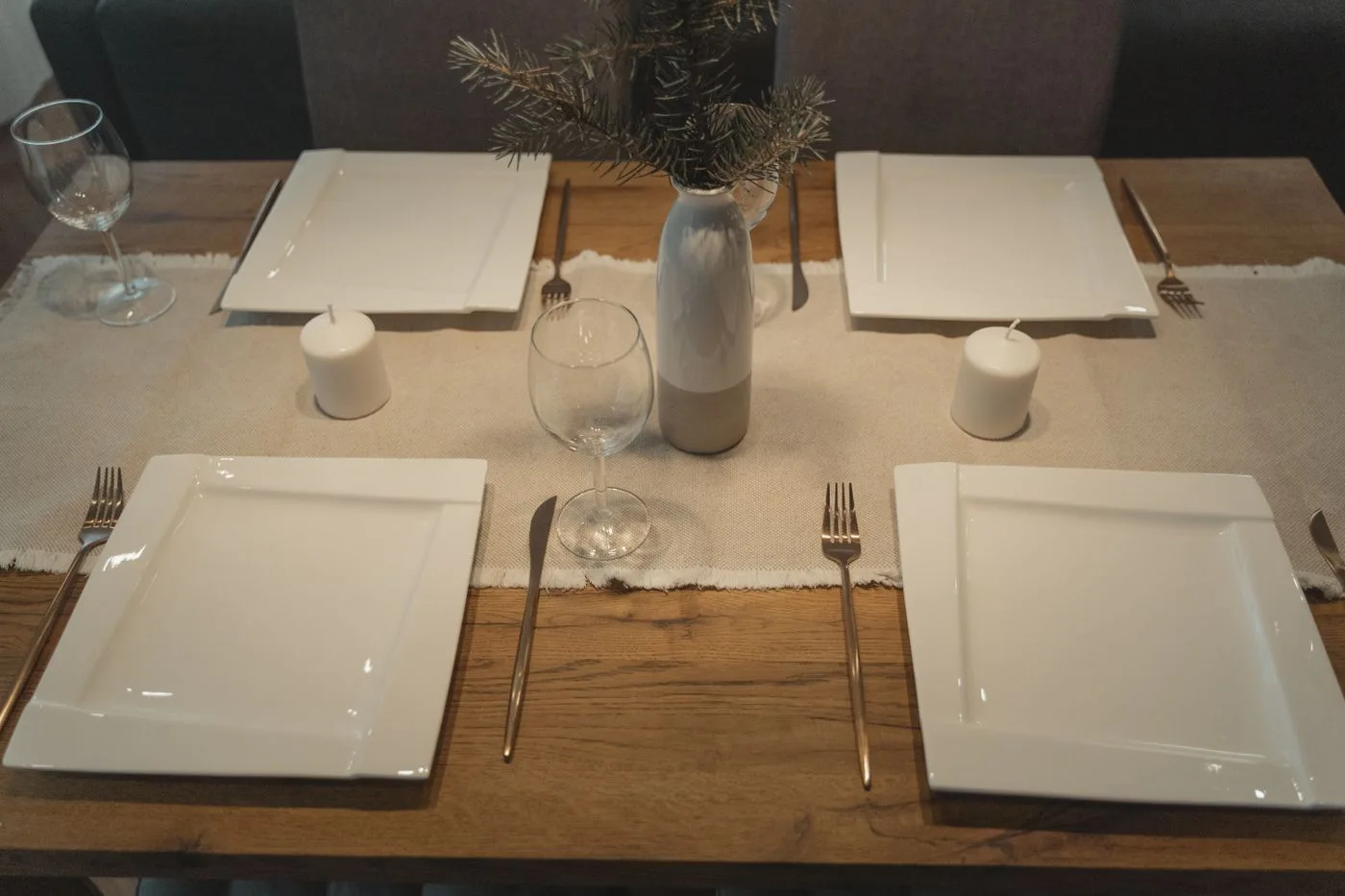
Look at the actual plates, cutlery and glassware together before judging how much center detail is wanted. An empty-table photograph can leave out the objects that form most of the ordinary meal view. Keep the real retained group visible instead of designing around a cropped image.
Where more than one serving stage belongs to the gathering, consider the actual transition. An optional piece should have an appropriate clearing destination rather than moving to another unresolved surface whenever the meal changes.
Keep the furniture’s real requirements clear
Use accurate information for the table and associated products. A visual plan does not establish capacity, material compatibility or a suitable placement method. Seek appropriate assistance where the actual question needs it rather than forcing an arrangement that merely looks balanced.
Keep readiness explicit as well. A polished serving piece should not imply that required care or a condition check is complete. Where another adult helps, describe the real group and stage instead of relying on a decorative order to communicate the entire process.
Choose a modest repeatable center
Retain the suitable pieces with genuine roles and give unrelated objects appropriate destinations. A short note can identify the actual setting where a recurring gathering makes that helpful. An ordinary useful table does not need a permanent design inventory.
What if the center repeatedly becomes crowded? Review the actual serving group before replacing furniture or buying smaller accessories. What if the plain version serves the meal best? Keep that clear result. A considered table center lets real people use retained products while decoration remains a modest personal choice rather than another task to manage.
After the gathering, return each item through its own requirements. A coordinated appearance should not make several different products share one assumed universal care or storage routine.
Related reading
A Dining-Table Workspace You Can Clear Before Dinner, A Small Brunch at Home Without a Full Kitchen Reset.
Girl In Home creates practical guides to style, home and travel. Our new buying guides explain selection criteria and tradeoffs; they do not claim hands-on testing. Our approach.


